
Not sure where to start?
Use the form below to reach out or to tell us about your needs. We look forward to connecting.
Oops! Something went wrong while submitting the form.
Use the form below to reach out or to tell us about your needs. We look forward to connecting.
This summer, I rented a bike and joined a guided tour through Portugal. On my own.
Before the trip, I searched Expedia for tour companies near my hotel. What sold me was the reviews: page after page of five-star stories about the value this company brought. One detail kept coming up. If you didn’t have a bike, they’d deliver one to your hotel the night before.
I was sold before I ever booked.
I didn’t know the roads. I didn’t speak the language. I had no idea what was around the next bend.
So I did something I don’t do often. I let go.
I followed someone who knew the roads, the language, and the route. And in that letting go, I found a kind of freedom I didn’t expect.
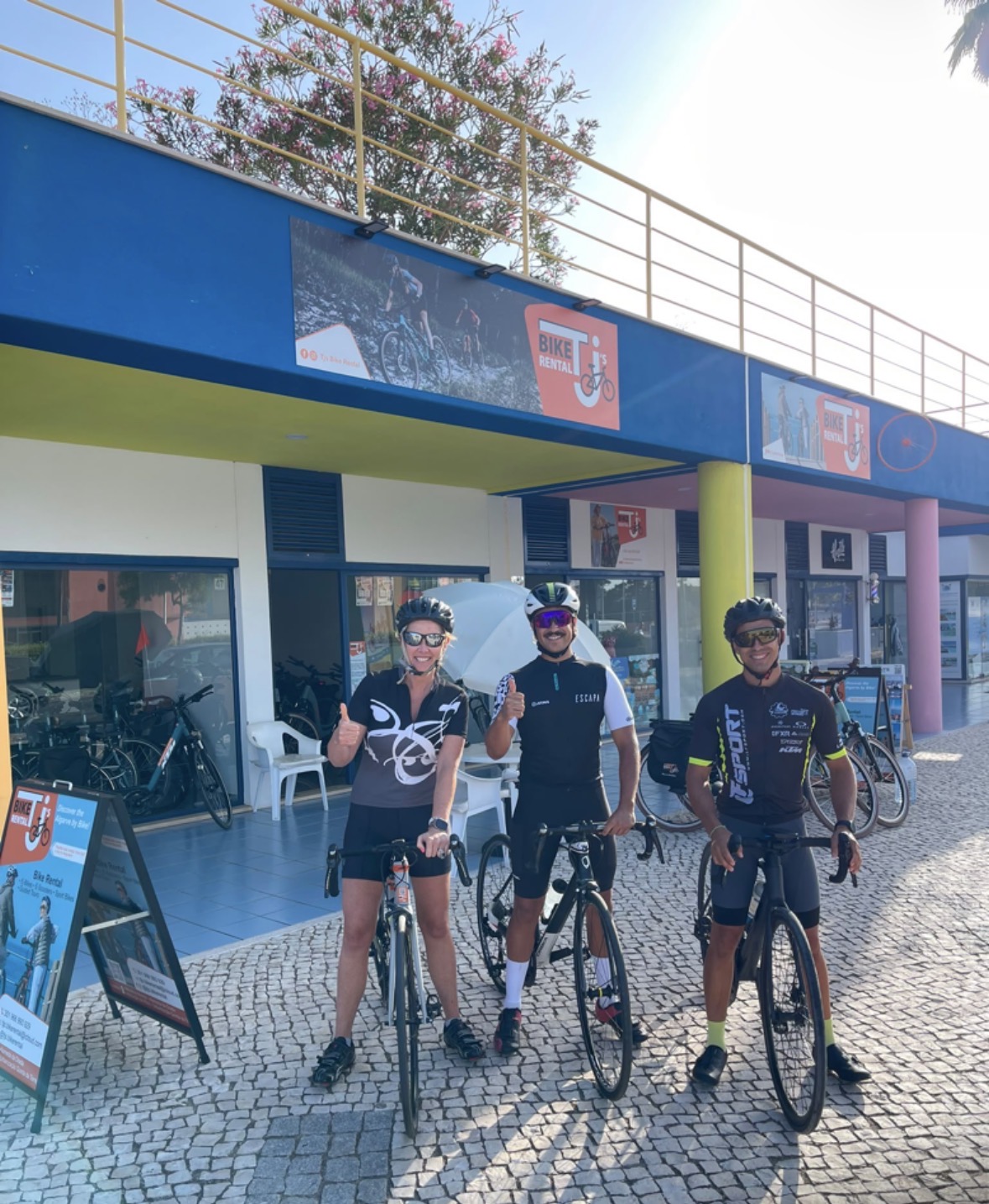
On one of those back roads, tucked away where no map would send you, was a little local café surrounded by orange trees. We stopped for an espresso and ended up chatting with the locals.
Nobody was rushing anywhere. People were enjoying their coffee, their conversation, each other. There was a calm energy of presence that I didn’t want to leave.
On my own, I’d have ridden right past it.
Our buyers have cafés like that too. A buyer says “it works… mostly” or “for now,” a small hint that something isn’t working. That’s the café. Most of us ride right past it, jumping to our next planned question instead of asking the follow-up. Lately, the best guide I’ve found for spotting those moments is AI.
Recently, I was coaching a rep on leading with more curiosity, getting beneath the surface to the emotion and motivation behind a buyer’s decisions.
The rep had a pre-call plan: the goal of the conversation, the questions that mattered most, and what we needed to learn about why the buyer does things the way they do. Most reps skip this step and wing it. Without a plan, there’s nothing to measure the call against.
After the call, I built a rubric that compared the transcript to that plan. It timestamped every moment the rep jumped to the next question instead of following up, spelled out the impact, and suggested open-ended questions that would have invited the buyer to share more.
At 14:32, the buyer said:
“Honestly, we’ve been doing it this way for years. It works… mostly.”
The rep’s next question:
“Got it. And how many SKUs are you managing right now?”
Mostly.
That one word was the buyer holding the door open. Something wasn’t working, and part of them wanted to talk about it.
But the rep was rushing to the next question. The door quietly closed. The rest of the call stayed on features and logistics, and never got to what the problem was costing them.
The rubric offered three questions that could have walked through that door:
When the rep watched the recording alongside the rubric, they saw it right away. No lecture needed.

The next time they practiced curiosity, the difference showed up. Their cycle time shortened. They got to root cause faster and were able to implement their solution sooner. They weren’t dancing around the idea anymore.
Most sellers never get feedback like that. But if we record our calls, the coaching is already sitting there. We’re just not asking the transcript the right questions.
Here’s the prompt, built on my SCOPE framework. Paste it into Claude, ChatGPT, or Copilot along with any discovery call transcript:
Self: I’m a B2B sales rep at [company] selling [solution] to [buyer role] in [industry]. I’m working on leading with curiosity and getting to the motivation behind a buyer’s decisions.
Context: Act as my sales coach. Below is the transcript of my discovery call with [role, company] and my pre-call plan. My goal was to [goal]. Compare the call to my plan. [paste plan] [paste transcript]
Output style: Direct and specific, like a coach who wants me to get better. Here’s what good feedback looks like: “At 14:32, the buyer said ‘it works… mostly’ and you moved to a question about SKUs. Try: ‘You said mostly. What happens when it doesn’t work?’”
Parameters: Start with a scorecard grading me 1–5 on opening and agenda, curiosity and depth, business impact, decision process, talk-to-listen balance, and next steps, with one transcript quote for each. Then give me a table with these columns: timestamp, what the buyer said, what I did, the impact, and the question I could have asked. End with my top three missed opportunities.
Exclusions: No generic sales advice. Nothing that isn’t supported by the transcript. Don’t soften the feedback.
One tip: run it on a call that went well too, and watch the recording with the results open. Hearing ourselves in that moment is what changes behaviour.
A pre-call plan prepares us for the conversation. But before there’s ever a call, there’s a first impression.
Remember that tour company? I trusted them before I ever met them, because the reviews were specific. They told me exactly what I’d get, down to a bike waiting at my hotel. Our buyers decide whether to trust us the same way, often from a single message. That’s where AI can guide us too.
Recently, I received a LinkedIn connection request from a partner at a well-regarded law firm:
“We help B2B founders save costs through legal protection against disputes, contract failures, and litigation risk. BTW, we just helped a client like you and I am sure we could help you the same. Open to a quick call?”
A reputable firm, and a first impression that said nothing about me. “A client like you” is the opposite of those tour reviews: vague, and impossible to check.
So I answered in his format:
“We help professional services craft messages that get a response. This will not cut it.”
His reply:
“Fair point. That message was too generic and made an unsupported claim. I’ll leave it there.”
And the door closed.
The “we help X achieve Y” hook works. It can’t stand on its own, though. It needs the second half: and this is how, for you specifically.
Here’s the SCOPE prompt to run before we hit send:
Self: I’m a [role] at [company]. We help [who] achieve [what]. I lead with research and curiosity, not volume.
Context: I’m sending a LinkedIn connection request to [name, title, company]. Act as a skeptical [their title] who gets dozens of cold messages a week. Tell me whether you’d reply and why, then rewrite my message. [paste their profile, recent posts, company page] [paste my draft]
Output style: Conversational and direct, one professional to another. Here’s what good looks like: “Hi Karen, we help training and consulting firms protect revenue through clearer client agreements. With multi-week programs, scope can quietly grow past what was signed. Curious whether that’s something you’ve run into?”
Parameters: Under 50 words. Use this structure: a “we help X achieve Y” hook, one specific reason it matters to this person now (drawn only from what I pasted), then a closing question.
Exclusions: No unsupported claims, no “clients like you,” no flattery. Don’t use “quick call,” “quick question,” or “just reaching out.” Close with a binary question of interest, such as “Is this a priority?”
Before the call, AI helps us know who we’re riding toward. After the call, it shows us what we rode past.

Back in Portugal, I didn’t need to know every turn. I needed someone who knew the roads, and the willingness to stop when something was worth stopping for- so I could see the beauty around me.
That’s what a good riding partner, and a good thinking partner, gives us. The hills are still ours to climb.
What’s one word a buyer said on your last call that deserved a follow-up question? Hit reply and tell me. I read every response.
Karen
P.S. Want to see the whole system live? This prompt is one piece of it. In a free three-part live series, I’ll walk through my real setup on screen: AI-powered prospecting, then how my calls go from transcript, to organized client file, to branded proposal, to AI coaching. Dates are coming soon. Reply “SERIES” and I’ll save you a spot.

For 20 years Karen has been specializing in the art and science of sales and communication her passion and experience are helping technical sales professionals become more confident and to disrupt with value.
Her dedication to developing and delivering customized sales training programs provide her audience practical, relevant tools that can be used immediately to break down the barriers in a competitive landscape and separate themselves from the noise.


We encourage you to take the first step towards change.
There are so many areas of business out of our control, yet we continue to invest in them and hope for a different outcome. What about your people? You have control over them and their development pathway. The ability to build a positive learning culture, improve their level of confidence and increase bottom line revenue.
Invest in them. Hone their sales skills to attract your most ideal clients, gain the required commitments through discovery, engage authentically and create an enjoyable repeatable experience for your clients.
Reach out to us today for a complimentary call.
Let us sharpen your skills and change your outcome.


.svg)


